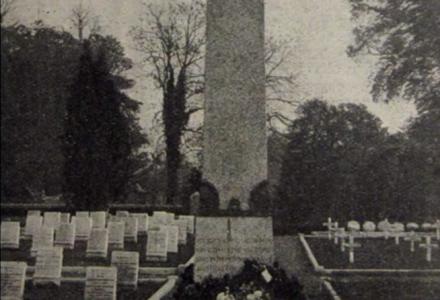
All three of ‘Annie’ Seager’s sons enlisted in the first week of the war. Annie’s youngest boy, George, was barely seventeen when he was killed at Gallipoli. Partly it was the absence of her own boys that persuaded her to turn to patriotic work. From the outbreak of the war, right to its very end, Annie Seager devoted herself to the care of South Australia's soldiers.
Annie's most ambitious task was the establishment of the Cheer-Up Society in Adelaide. Its purpose was to boost morale amongst the troops: concerts and singsongs, picnics, luncheons, and many a farewell dinner were organised by Annie and her army of voluntary helpers.
Farewelling the boys was an easy matter. The return of crippled and wounded men was infinitely harder. Dancing with the lads had been fun, but how did one entertain the maimed, the blind, or those who had been driven out of their senses?
By the end of 1916 a steady stream of wounded were making their way back to Adelaide. Intended as a place of light-hearted amusement, the Hut became a haunting blend of hospital, memorial, recreation room, and madhouse.
It was also an institution staffed and managed almost entirely by women. The girls and women working at the Hut faced dirty and demanding work, tending to the needs of men made more helpless than children.
Annie Seager’s Cheer-Up Hut shut down at the end of the war. The Hut was demolished in 1972 and the site is now occupied by Adelaide’s Festival Hall. But a plaque on the northern wall still pays homage to the Cheer-Up’s work, the women of Adelaide determined to offer what comfort they could to their soldiers.
The Seager story reminds us of the huge emotional labour many women invested in war work, and the many influences, patriotic and personal, that motivated their efforts. It highlights the role women’s unpaid labour played in prosecuting the war effort.